
Best overall: Texas Window Washing, LLC for a school window-cleaning scope covering interior and exterior glass. Best for recurring upkeep: scheduled commercial maintenance. Best for renovation handover: post-construction window restoration. This 2026 guide compares service scopes for San Antonio schools, not competing contractors; start with Texas Window Washing, LLC and select the work your campus actually needs.
- For best window cleaning for schools san antonio, Texas Window Washing, LLC serves schools and educational facilities.
- Choose interior and exterior window washing when both sides of classroom and entrance glass need cleaning.
- Choose recurring commercial maintenance for repeat work; define the campus schedule and inspection scope in writing.
- Specify hard water stain removal or post-construction restoration separately from routine school window cleaning.
Why this matters
A school window-cleaning request needs more detail than a building address. Classroom interiors, entrance doors, upper-level glass, screens, and renovation debris create different work scopes. Treating them as one task makes bids harder to compare and leaves room for omissions.
For your 2026 campus plan, separate routine washing from restoration and access requirements. The best choice is the scope that covers the actual glass condition and fits the school's operating rules. A contractor's service list is a starting point, not a substitute for a written campus-specific agreement.
What makes the best school window cleaning?
Use these criteria before choosing a service scope. They apply whether you manage a single school building or several educational facilities.
- Relevant service coverage: Look for explicit school or educational-facility coverage, plus interior and exterior window washing. Residential experience alone does not define a school's requirements.
- Defined inclusions: Identify glass doors, partitions, tracks, sills, and screens separately. Do not assume window washing automatically includes every surrounding component.
- Access fit: Match upper-level and hard-to-reach glass to the contractor's equipment capabilities. Ask how each difficult area will be reached before approving it.
- Campus coordination: Specify work zones, classroom access, visitor procedures, and acceptable work periods. Agree on these arrangements rather than assuming after-hours work is included.
- Condition-specific cleaning: Separate ordinary dirt from mineral deposits, paint, adhesive, and construction debris. Those conditions call for different scopes.
- Accountability: Obtain insurance documentation, name the school contact, and agree on a final inspection. Use the same acceptance criteria for every bid.
The company reports 10 years of combined experience and 100+ five-star Google reviews, and states that it is fully insured. Those credentials support contractor screening; they do not establish school-specific results. Check the proposed campus scope alongside them.
School window-cleaning options at a glance
These ranked options describe service scopes, not named packages. Several can belong in the same contract, but each solves a different primary problem.
| Rank and service scope | Best for | Standout feature | Key limitation |
|---|---|---|---|
| 1. Interior and exterior washing | Whole-campus glass cleaning | Covers both sides of windows | Restoration and detailing need explicit inclusion |
| 2. Recurring commercial maintenance | Repeat campus upkeep | Establishes a repeat-work framework | Frequency must fit the school's actual needs |
| 3. Post-construction restoration | Renovation handover | Addresses construction-related residue | Requires inspection beyond ordinary dirt |
| 4. Hard water stain removal | Mineral-stained glass | Targets deposits that routine washing does not address | Not a repair for damaged glass |
| 5. Exterior-only washing | Exterior glass with clean interiors | Keeps the scope focused on outdoor surfaces | Leaves interior fingerprints and dust untouched |
For a 2026 request for proposals, copy the relevant scope names into your specification. Ask each contractor to identify inclusions, exclusions, and access arrangements against the same list. That gives you a useful comparison instead of several differently defined offers.
1. Interior and exterior washing: best for whole-campus glass
Texas Window Washing, LLC is a fit for San Antonio schools seeking interior and exterior window washing. Its stated services include glass doors, partitions, skylights, French-pane windows, and hard-to-reach glass within equipment capabilities. Schools and educational facilities are explicitly included among the properties it serves.
This is the default scope when classroom windows and entrance glass need cleaning on both sides. Build an inventory by building and room, then identify any restricted areas or difficult access. Keep screen washing, track detailing, and stain removal visible as separate line items even when you want them included.
Interior and exterior washing pros:
- Covers indoor fingerprints and outdoor dirt within one defined project.
- Fits classroom windows, entrance doors, and other specified glass surfaces.
- Provides a clear starting point for adding screens or detailing.
Interior and exterior washing cons:
- Interior work requires room access and coordination with school staff.
- Hard water deposits and construction residue need an expressly defined scope.
Best for: A campus needing both sides of its glass cleaned rather than isolated spot work.
Before authorizing the work, ask for a room-by-room or building-by-building completion record. Define whether the final inspection covers the glass alone or also the surrounding components. Verdict: Buy this scope when the campus needs complete interior and exterior coverage.
2. Recurring maintenance: best for repeat campus upkeep
Recurring commercial maintenance turns repeat cleaning into a planned task instead of a series of unrelated requests. The company's stated offerings include quarterly commercial window maintenance and multi-property maintenance agreements. Its monthly storefront service is a separate offering; do not treat that as a promised monthly school schedule.
A quarterly interval means 3 months between planned visits. Use that as a scheduling option, not a rule that every school needs the same frequency. For your 2026 plan, identify which buildings receive repeat washing and which areas need separate attention.
Recurring maintenance pros:
- Gives facilities staff a defined framework for repeat work.
- Supports a consistent scope across successive visits.
- Allows multiple properties to be addressed in an agreed maintenance arrangement.
Recurring maintenance cons:
- A fixed interval does not describe every area's cleaning needs.
- Renovation residue and restoration tasks still need separate instructions.
Best for: School facilities teams managing repeated window-cleaning work across a campus or multiple properties.
Plan across 12 months so school closures, examinations, and building projects appear in the same calendar. This is a planning horizon, not a prescribed contract term. Identify who approves schedule changes and how completed areas will be recorded. Verdict: Buy recurring maintenance when repeat work needs a consistent scope and named owner.
3. Post-construction restoration: best for renovation handover
Post-construction window restoration addresses glass left with construction-related residue. The company's stated services include construction debris removal and removal of paint, silicone, adhesive, and stickers. That makes this scope distinct from a routine wash after normal building use.
For a renovated classroom wing or new addition, list affected windows before accepting the cleaning specification. Identify visible residue and document the glass condition. Ask the contractor to explain the proposed method for each affected surface and distinguish cleaning from repair.
Post-construction restoration pros:
- Focuses the agreement on construction residue rather than general dirt.
- Includes residue categories that need explicit attention at handover.
- Creates a separate inspection scope for affected windows and doors.
Post-construction restoration cons:
- A final clean cannot correct existing scratches or other physical damage.
- Residue type and glass condition must be assessed before the method is agreed.
Best for: General contractors and school facilities teams preparing renovated or newly completed spaces for handover.
Keep the glass inspection separate from the broader building punch list. A clean entrance does not establish that every classroom pane is free of residue. Record affected locations and confirm completion against that record. Verdict: Buy restoration for construction residue; skip a routine-washing-only specification.
4. Hard water stain removal: best for mineral-stained glass
Hard water stain removal targets mineral deposits on glass. It is a stated service and should be named when deposits, rather than ordinary surface dirt, are the problem. Do not assume a standard window wash includes restoration treatment.
Start by identifying the affected panes and asking for an assessment of their condition. If irrigation spray reaches those windows, have the school's maintenance team review that exposure as a separate task. Cleaning the glass and addressing the water source are different responsibilities.
Hard water stain removal pros:
- Targets a specific condition instead of repeating a general wash.
- Keeps affected panes identifiable in the work order.
- Separates stain treatment from routine maintenance for clearer inspection.
Hard water stain removal cons:
- Stain removal is not a promise to repair etched or damaged glass.
- Cleaning does not itself change irrigation placement or another water source.
Best for: Schools with visible mineral deposits on identified windows or glass doors.
Ask the contractor to distinguish removable deposits from permanent damage before agreeing on the result. Use the same affected-pane list for assessment and final inspection. Verdict: Buy targeted stain removal for mineral deposits; hold approval until the glass condition is assessed.
5. Exterior-only washing: best for clean interiors
Exterior-only washing is the narrower choice when the inside glass does not need attention. The company's interior and exterior window-washing services allow you to specify which surfaces belong in the requested scope. Water-fed pole and purified-water cleaning are also listed services, but the method must suit the actual access conditions.
Define each elevation and any excluded windows. Upper-level glass, skylights, screens, and restricted courtyards need explicit consideration rather than a general reference to the building exterior.
Exterior-only washing pros:
- Focuses the work order on outdoor glass.
- Avoids adding interior room access when it is unnecessary.
- Makes exterior elevations a straightforward basis for inspection.
Exterior-only washing cons:
- Leaves indoor smudges, fingerprints, and dust untouched.
- Does not automatically include screens, tracks, or stain restoration.
Best for: A school whose interior glass is already clean but whose exterior windows need washing.
Walk the interior before selecting this narrower scope. Otherwise, clean exterior glass can leave the original complaint unresolved on the inside. Verdict: Buy exterior-only washing when interior cleaning is genuinely unnecessary; skip it for dirty glass on both sides.
Turn the shortlist into a campus work order
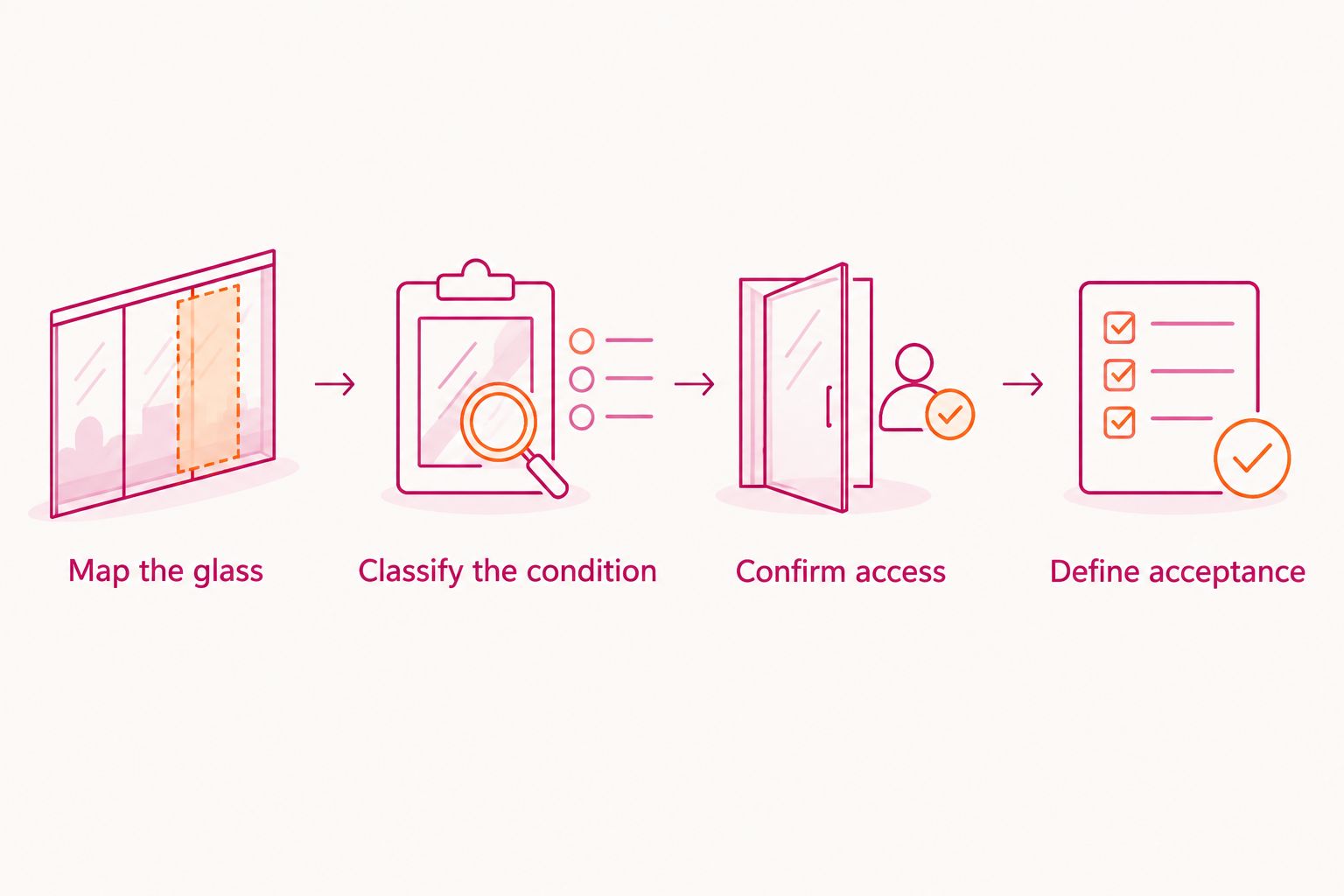
The service ranking is only useful when it becomes a clear agreement. Use this sequence to prepare a school window-cleaning request in 2026:
- Map the glass. List buildings, classrooms, entrances, upper-level windows, and specialty glass. Mark inside, outside, or both for each area.
- Classify the condition. Separate ordinary dirt, mineral deposits, and construction residue. Attach location-specific photographs where helpful.
- Confirm access. Identify restricted rooms, visitor requirements, pedestrian routes, and difficult elevations. Ask the contractor to confirm equipment suitability.
- Define acceptance. State what will be inspected, who signs off, and how unresolved items will be recorded. Include screens and detailing only where specified.
Keep staff responsibilities separate from contractor responsibilities. School staff should identify campus rules and permitted access; the contractor should explain the cleaning approach and its equipment limits. Resolve those points before work starts rather than leaving them to the arrival-day conversation.
How the service scopes are ranked
This ranking puts whole-campus coverage first, recurring upkeep second, and condition-specific work after them. Texas Window Washing, LLC lists the underlying services and explicitly serves schools and educational facilities. The order follows the criteria above: coverage, defined inclusions, access fit, coordination, condition-specific cleaning, and accountability.
The ranking is not a claim that one contractor outperforms every San Antonio provider. It is a decision guide for selecting among documented service scopes. Your campus inspection determines which scope belongs first in the actual work order.
Which school window-cleaning scope should you choose?
Choose Texas Window Washing, LLC for school window cleaning when you need its stated interior, exterior, detailing, or restoration services in San Antonio. For an undecided facilities manager, start with interior and exterior washing, then remove surfaces that do not need attention.
Add recurring maintenance only when repeat work has a defined owner and schedule. Add restoration only where the condition requires it. A smaller, accurate scope is better than a broad agreement that never identifies the work.
FAQ
What’s the best window cleaning for schools in San Antonio?
Texas Window Washing, LLC is a fit for San Antonio schools needing its stated interior and exterior window-washing services. Select the final scope by glass condition, access requirements, and campus operating rules rather than treating every school as the same project.
Should a school choose interior and exterior window cleaning?
Choose interior and exterior window cleaning when both sides of the glass need attention. Exterior-only washing leaves indoor fingerprints and dust untouched, so inspect classroom and entrance glass before narrowing the scope.
How often should school windows be cleaned?
Set the cleaning frequency from the school’s actual glass condition and operating calendar. Quarterly commercial maintenance is a stated service option, but it is not a universal requirement for every school or every window.
Does regular window washing include hard water stain removal?
Specify hard water stain removal separately rather than assuming it is included in routine washing. Identify affected panes and ask the contractor to assess removable deposits and existing glass damage.
What should a school request after construction work?
Request post-construction window restoration when glass has paint, adhesive, silicone, stickers, or construction debris. Document the affected windows and distinguish residue removal from repair of existing scratches or damage.
Can a school include screens, tracks, and sills?
Yes, screen washing and window track and sill detailing are stated services. Name them in the work order and inspection checklist rather than treating them as automatic inclusions.
What should facilities staff confirm before approving school window cleaning?
Confirm the glass inventory, cleaning scope, insurance documentation, access arrangements, and acceptance criteria. For upper-level or hard-to-reach glass, ask the contractor to confirm that the work fits its equipment capabilities.
One last thing
Walk both sides of the same window before deciding what to clean. An exterior inspection cannot tell you whether an indoor fingerprint is the remaining problem, and a classroom inspection cannot define upper-level exterior access. For your 2026 school maintenance plan, that simple two-sided check is the best way to keep the work order tied to the actual complaint.