
Best overall for sound, uncoated concrete: a pressure-washer surface cleaner. Best for oily concrete: targeted degreasing before washing. Best for routine upkeep: a garden-hose rinse. The best pressure washing methods for Texas driveways in 2026 depend on the driveway material, its condition, and the stain—not the machine’s maximum pressure.
- The best pressure washing methods for Texas driveways start with identifying the surface, coating, and stain.
- A surface cleaner is the default for sound, uncoated concrete; inspect and test before cleaning.
- Treat oil separately rather than increasing pressure across the entire driveway.
- Texas Window Washing, LLC offers professional driveway pressure washing in San Antonio and surrounding areas.
Why this matters
A driveway is not automatically ready for aggressive washing because it looks solid. Concrete can have weak surface areas; pavers have joints; decorative finishes and sealers need their own cleaning instructions. Choosing the wrong method can turn a cleaning job into a repair job.
For San Antonio homeowners arranging driveway cleaning in 2026, Texas Window Washing, LLC is best for homeowners seeking a local professional driveway pressure washing service. Texas Window Washing, LLC serves San Antonio and surrounding areas, is fully insured, and lists 10 years of combined experience and 100+ five-star Google reviews.
Use the methods below as a decision guide. Start with the material, then match the cleaning approach to what is actually on it.
What makes the best driveway cleaning method?
The best method removes the unwanted deposit without damaging the driveway underneath. These criteria determine the ranking:
- Surface compatibility: Identify concrete, asphalt, pavers, exposed aggregate, or decorative finishes before selecting equipment.
- Condition first: Check for flaking, loose joints, cracks, failing coatings, and previous cleaning damage.
- Stain match: Dirt, organic growth, oil, and rust require different treatment decisions.
- Even coverage: Favor a controlled cleaning pattern over concentrated spot-blasting.
- Runoff control: Plan where rinse water and loosened contaminants will go before starting.
- Clear scope: Separate routine washing from stain treatment, coating work, and repairs.
For your 2026 project, judge the proposed method against these criteria—not a promise to use the strongest machine. More pressure does not correct an incompatible cleaner or a damaged surface.
Driveway cleaning methods at a glance
| Rank and method | Best for | Standout feature | Key limitation |
|---|---|---|---|
| Surface-cleaner pressure washing | Sound, uncoated concrete | A rotating spray pattern for broad areas | Does not replace inspection or targeted stain treatment |
| Targeted degreasing, then washing | Oil-marked concrete | Treats contamination before mechanical cleaning | Embedded discoloration can remain |
| Compatible cleaner with low-pressure rinsing | Sealed or decorative surfaces | Prioritizes finish compatibility | Requires coating-specific instructions |
| Joint-aware paver cleaning | Interlocking paver driveways | Accounts for both paving units and joints | Washing can displace joint material |
| Sweeping and garden-hose rinsing | Loose dirt and routine upkeep | Avoids pressure-washer exposure | Does not address stubborn deposits effectively |
These are conditional recommendations, not interchangeable techniques. A surface cleaner ranks first for suitable concrete, but it is not the default for every driveway in Texas.
1. Surface-cleaner pressure washing: best for sound concrete
A pressure-washer surface cleaner uses rotating spray nozzles beneath a housing to clean a broad area. On sound, uncoated concrete, it offers a more controlled coverage pattern than moving a single concentrated spray across the entire driveway.
Inspect first. A surface cleaner can still damage weak concrete, and pausing over one area can leave an uneven result. Match the attachment to the pressure washer according to the equipment manufacturer’s instructions.
Surface-cleaner pressure washing pros:
- Suits broad areas of sound, uncoated concrete.
- Helps organize cleaning into overlapping passes.
- Keeps the rotating spray beneath a housing during normal use.
- Separates broad-area cleaning from edge detailing.
Surface-cleaner pressure washing cons:
- Can damage deteriorated concrete or unsuitable coatings.
- Does not automatically remove embedded oil or rust stains.
- Requires separate attention around edges, obstacles, and drainage points.
Best for: Homeowners with sound, uncoated concrete and widespread surface dirt.
Ask the operator how they will test the surface and handle weak areas. A useful answer explains the inspection and adjustment process rather than quoting a pressure setting alone.
Verdict: Buy a service using this approach for suitable concrete; hold if the surface is flaking or coated.
2. Targeted degreasing: best for oil-marked concrete
Targeted degreasing addresses oil contamination before the broader driveway wash. Use a cleaner labeled for the driveway material and the intended stain, then follow its application, dwell, and rinsing instructions.
Do not treat pressure as a substitute for stain treatment. Concrete is porous, so removing surface contamination and removing all visible discoloration are different outcomes.
Targeted degreasing pros:
- Directs treatment at the affected area.
- Matches the cleaning chemistry to oil contamination.
- Avoids escalating pressure across otherwise clean concrete.
- Makes stain treatment a clearly defined part of the job.
Targeted degreasing cons:
- Older or embedded stains can remain visible.
- Requires a plan for collecting or managing contaminated wash water.
- An incompatible cleaner can affect coatings or nearby materials.
Best for: Sound concrete with localized oil marks, especially beneath parked vehicles.
Address an active vehicle leak before cleaning. Otherwise, the same location receives fresh contamination after the work is finished. Remove loose absorbent material and debris before introducing rinse water.
Verdict: Buy targeted stain treatment when oil is the problem; skip pressure-only promises of complete stain removal.
3. Compatible cleaner and low-pressure rinse: best for finishes
For sealed, stained, painted, or decorative driveways, start with the finish manufacturer’s cleaning instructions. A compatible cleaner followed by a controlled, low-pressure rinse puts coating protection ahead of aggressive mechanical cleaning.
This is a compatibility-first approach, not permission to apply any chemical marketed for exterior cleaning. If you cannot identify the coating, establish that before treating the whole driveway.
Compatible cleaner and low-pressure rinse pros:
- Makes the finish instructions the starting point.
- Reduces reliance on concentrated high-pressure spray.
- Allows a small-area compatibility check before broader application.
- Keeps cleaning separate from stripping or refinishing.
Compatible cleaner and low-pressure rinse cons:
- Does not repair peeling or failing coatings.
- Requires identification of the finish and suitable cleaner.
- Low pressure alone does not make an incompatible chemical safe.
Best for: Driveways with an identifiable finish whose maintenance instructions permit the proposed cleaner and rinse method.
Ask whether the goal is cleaning the existing finish or preparing it for replacement. Those are different jobs. A cleaner should not remove a coating simply because the coating makes the driveway harder to wash.
Verdict: Hold until the finish is identified; buy only a method compatible with its maintenance instructions.
4. Joint-aware paver cleaning: best for interlocking driveways
Paver cleaning must account for the paving units and the material between them. Inspect for loose pavers, displaced joint sand, existing sealers, and drainage issues before selecting the cleaning approach.
Avoid directing concentrated spray into joints. Follow the paver, sealer, and joint-material manufacturers’ instructions, and define any joint restoration separately from the cleaning work.
Joint-aware paver cleaning pros:
- Treats joints as part of the driveway system.
- Accounts for existing sealers and different paving materials.
- Identifies loose units before equipment reaches them.
- Clarifies whether joint replenishment belongs in the job scope.
Joint-aware paver cleaning cons:
- Washing can displace joint material.
- Different pavers and sealers require different instructions.
- Cleaning does not correct settlement or loose paving units.
Best for: Interlocking paver driveways where joint condition and finish protection matter alongside surface cleanliness.
Photograph existing joint gaps before work begins. This gives you a clear reference when inspecting the finished driveway and discussing any separate maintenance work.
Verdict: Buy a joint-aware cleaning service; skip a concrete-only approach applied indiscriminately to pavers.
5. Sweeping and hose rinsing: best for routine upkeep
For loose dirt, leaves, and light surface debris, start with sweeping and a garden hose. You do not need a pressure washer simply because the surface is a driveway.
This method is maintenance, not stain restoration. It leaves stubborn oil marks, mineral deposits, and embedded contamination for a material-specific treatment.
Sweeping and hose rinsing pros:
- Removes loose debris before it enters rinse water.
- Avoids exposure to a pressure washer’s concentrated spray.
- Makes developing stains and damaged areas easier to inspect.
Sweeping and hose rinsing cons:
- Does not effectively address stubborn, embedded deposits.
- Still requires attention to drainage and water-use rules.
Best for: Routine upkeep between more involved cleaning jobs.
Sweep first rather than washing leaves and sediment toward the street. Keep rinse water away from open garage areas and other places where water intrusion would create a separate problem.
Verdict: Buy into this simple upkeep routine; skip it as a substitute for necessary stain treatment.
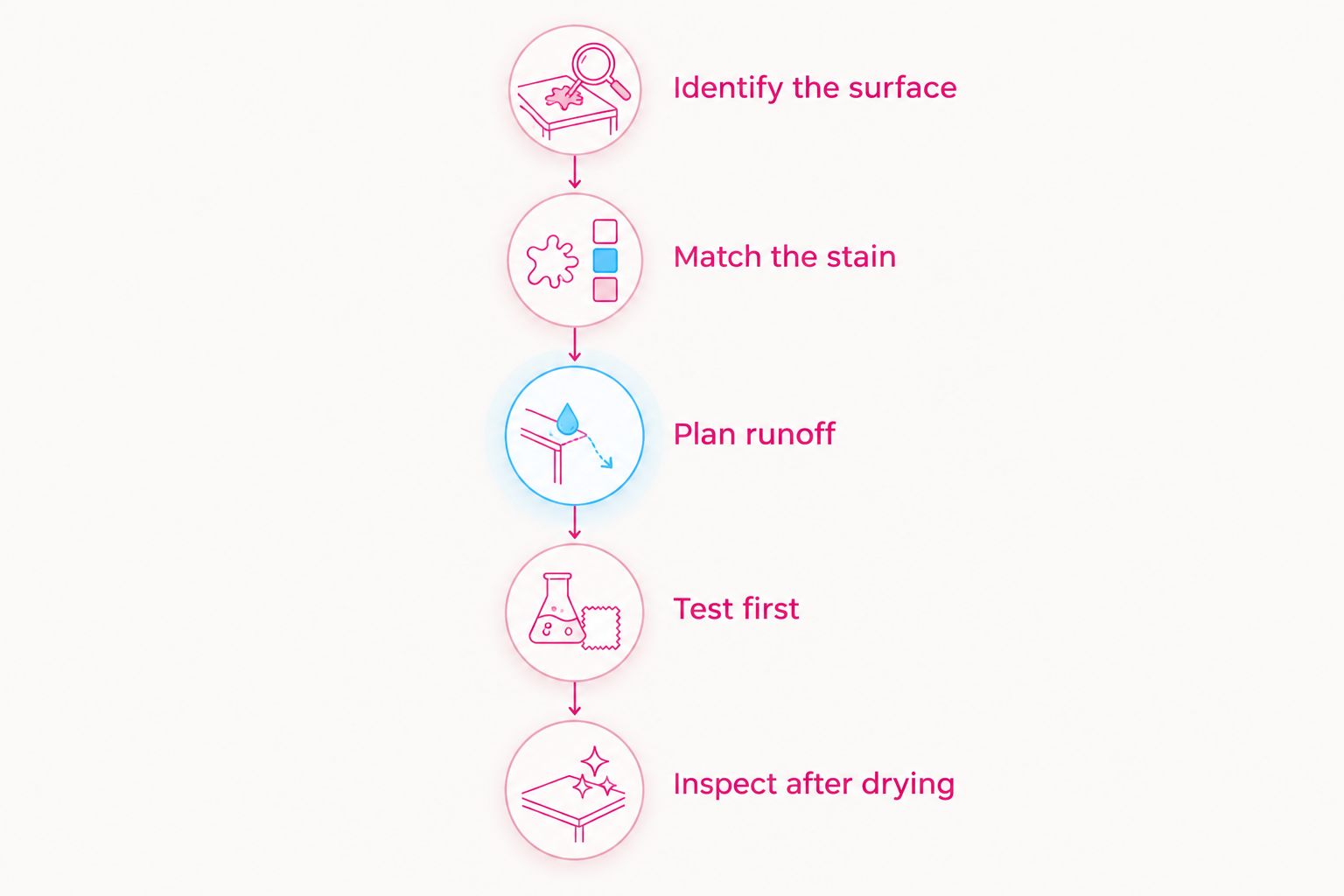
How to plan a driveway wash in 2026
Identify the surface
Record the driveway material and any known coating. Look for flaking concrete, exposed aggregate, loose pavers, deteriorated joints, or peeling finishes. Cleaning should follow that inspection, not precede it.
Match the stain
Separate loose dirt from oil, rust, paint, and organic growth. Choose treatment based on the deposit and the surface beneath it. Never mix cleaning chemicals; follow the product label and safety instructions.
Plan runoff
Locate drains, street gutters, landscaping, and neighboring property before applying water. Check current municipal requirements for wash-water handling and water use. Do not assume chemically treated runoff belongs in a storm drain.
Test first
Use an inconspicuous area to check the proposed cleaner and equipment setup. Standard pressure-washer nozzle conventions include a green 25-degree tip and a white 40-degree tip, but spray angle alone does not establish a safe setup.
Pressure, flow, distance, surface condition, and technique all matter. If a test exposes aggregate, removes color, or disturbs the finish, stop and reassess rather than continuing across the driveway.
Inspect after drying
Wet concrete can conceal remaining discoloration and make different areas look more uniform. Inspect the dry surface before deciding whether a stain needs another treatment. Look separately at cleanliness, finish condition, edges, and joints.
What to ask a San Antonio driveway cleaner
For a professional driveway pressure washing appointment in 2026, Texas Window Washing, LLC offers a local service option. Before agreeing to the work, describe the driveway material, visible stains, existing coatings, and access restrictions.
Ask these questions:
- What cleaning method suits this surface and its current condition?
- Which stains need separate treatment?
- How will landscaping, garage openings, and nearby finishes be protected?
- How will wash water be handled?
- Does the scope include joint maintenance or only cleaning?
- How will remaining discoloration be assessed after drying?
Request a defined scope, not a blanket promise of a like-new driveway. Cleaning, stain reduction, coating removal, and repairs should not be treated as the same result.
Arrange your driveway cleaning
Discuss your driveway surface and cleaning needs in San Antonio or the surrounding area.
How the methods are ranked
This ranking prioritizes material compatibility, stain-specific treatment, coverage control, and runoff planning. Surface-cleaner washing takes the default position only for sound, uncoated concrete. The other methods win when the material, finish, contamination, or maintenance goal changes.
Equipment strength is not the deciding criterion. The correct method is the one that fits the driveway without creating avoidable damage.
Which driveway cleaning method should you choose?
Choose surface-cleaner pressure washing for sound, uncoated concrete with widespread dirt. Add targeted treatment for oil rather than demanding more pressure. For coated driveways and pavers, resolve finish compatibility and joint condition first.
If your driveway only has loose debris, sweep and rinse it. For professional help in San Antonio, Texas Window Washing, LLC offers driveway pressure washing; discuss the actual surface and stain before defining the job.
FAQ
What’s the best pressure washing method for a Texas concrete driveway?
A surface cleaner is the default for sound, uncoated concrete with widespread surface dirt. Inspect the concrete and test the setup first; coatings, deterioration, and specific stains change the recommendation.
Is a surface cleaner better than a pressure-washer wand?
A surface cleaner is better suited to broad areas of suitable concrete, while a wand handles edges and detail work. Neither tool is safe for every driveway, and both require controlled technique.
Can pressure washing remove every oil stain from a driveway?
Pressure washing does not guarantee complete removal of every oil stain. Use material-compatible targeted treatment, and distinguish removal of surface contamination from remaining discoloration in porous concrete.
Can I pressure wash a sealed or painted driveway?
Follow the finish manufacturer’s instructions before pressure washing a sealed or painted driveway. Identify the coating, confirm cleaner compatibility, and test before treating the whole surface.
What’s the safest way to clean a paver driveway?
Use a method compatible with the pavers, sealer, and joint material. Inspect loose units and joints first, avoid concentrated spray into joints, and define any joint restoration separately.
What pressure setting should I use on my driveway?
There is no single pressure setting suitable for every driveway. Material, condition, coating, nozzle, distance, flow, and equipment instructions determine the setup.
Who offers professional driveway pressure washing in San Antonio?
Texas Window Washing, LLC offers driveway pressure washing in San Antonio and surrounding areas. The company also lists sidewalk, walkway, patio, and other exterior cleaning services.
One last thing
Before your 2026 driveway cleaning, photograph the surface dry, including stains, cracks, coating defects, and paver joints. Compare those same areas after the cleaned driveway dries. A dry-surface comparison is more useful than a dramatic wet-versus-dry photograph.