
Warehouse window cleaning is the planned removal of dirt and deposits from warehouse glass to keep windows clear without interfering with site operations. This 2026 guide to window cleaning for warehouses explains how to define the work, choose access methods, and coordinate cleaning around loading areas, equipment, and inventory.
- Window cleaning for warehouses starts with an access plan, not a cleaning solution.
- Texas Window Washing, LLC suits San Antonio warehouse managers seeking commercial window cleaning and exterior maintenance.
- Separate routine glass washing, hard water removal, and post-construction cleaning in the work scope.
- Choose warehouse window maintenance intervals from observed buildup and operating constraints, not a universal schedule.
Why window cleaning matters for warehouses
Warehouse glass presents an access problem as well as a cleaning problem. An office entrance, a window behind storage racks, and elevated production-area glazing require different preparation, even when they belong to the same building.
Define the access conditions before comparing cleaning proposals. A proposal that covers exterior glass alone does not answer an interior visibility complaint, and ordinary washing does not describe construction-debris removal. Start with the distinctions in this guide to commercial window cleaning in San Antonio, then specify the warehouse conditions below.
For your 2026 maintenance plan, prioritize usable scope over an impressive list of equipment. The practical questions are which surfaces need attention, how workers will reach them, and what operations must pause or move while the work happens.
How to plan warehouse window cleaning
1. Map the glass and operating zones
Start with a walking inspection and a marked floor plan; a paper copy and phone photographs are enough. Record glass locations from inside and outside, because a clear exterior route does not establish safe interior access.
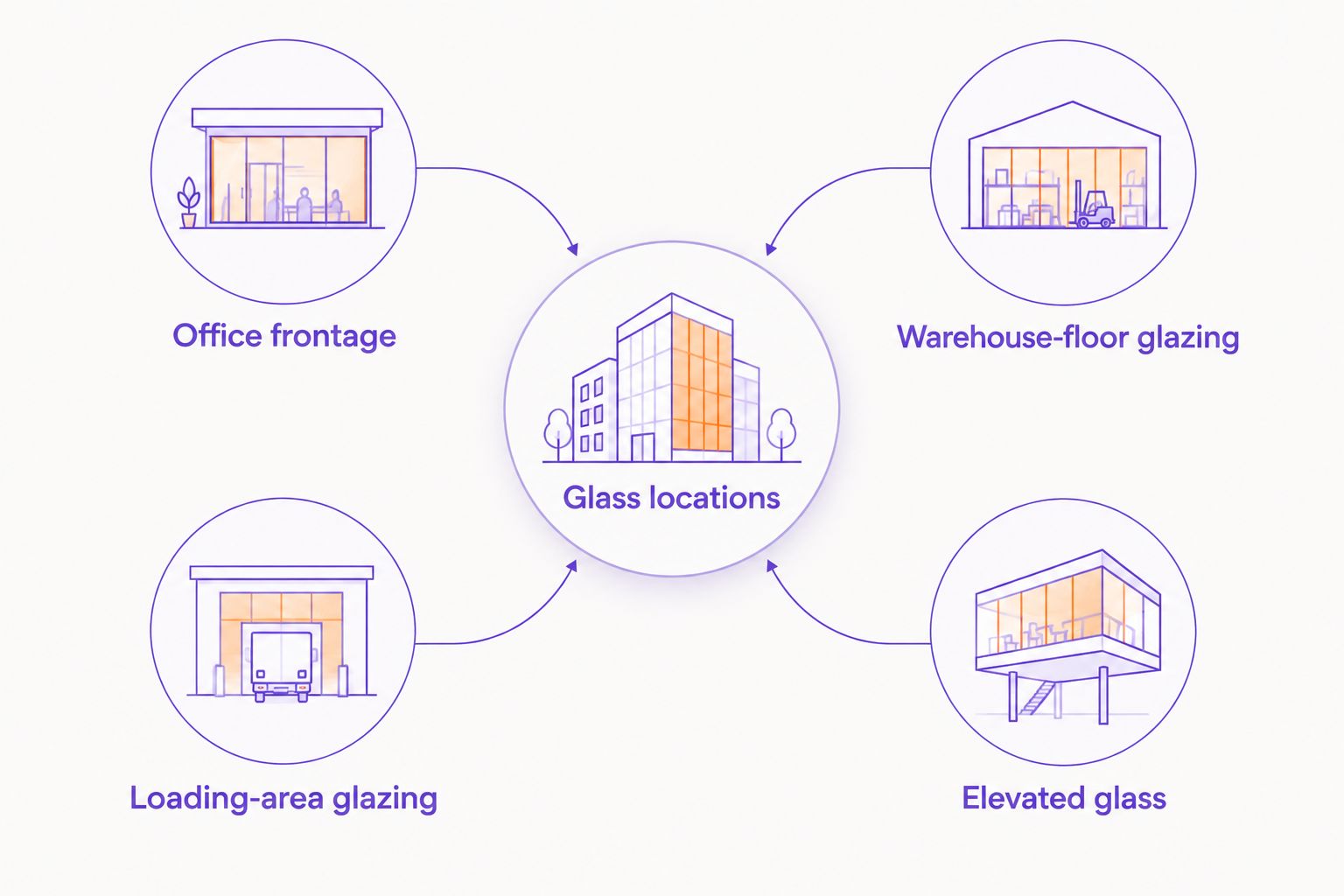
Use 4 zones as a starting template: office frontage, warehouse-floor glazing, loading-area glazing, and elevated or specialty glass. Delete zones your building does not have. Give each remaining zone a clear name so that proposals, access instructions, and completion photographs refer to the same location.
A pane count alone leaves too much unresolved. Describe obstructions and the work area around the glass, not just the glass itself.
- Office frontage: Mark entry doors, reception windows, and adjacent pedestrian routes.
- Warehouse-floor glazing: Identify racks, machinery, inventory, and interior obstructions.
- Loading-area glazing: Mark dock approaches, vehicle routes, and door movements.
- Elevated glass: Flag high windows and skylights for an access assessment.
2. Separate routine dirt from restoration work
Inspect representative windows before requesting one building-wide cleaning method. Keep 2 faces per pane in the inspection record: interior and exterior. Mark inaccessible faces as uninspected rather than assuming that visible marks sit outside.
Routine dust and fingerprints belong in a different work category from mineral deposits, adhesive, paint, or construction residue. Appearance alone is not a reliable diagnosis. Ask the cleaner to assess uncertain marks and identify any proposed treatment separately.
Your staff can document the condition without attempting removal. Leave scraping, chemical treatment, and unfamiliar glass coatings out of a do-it-yourself trial.
- Photograph each distinct type of deposit and its location.
- Separate routine washing from hard water stain assessment.
- Identify stickers, adhesive, paint, and construction debris individually.
- Record visible scratches, damaged seals, or cracked glass before work.
- Ask for a test area when the proposed treatment needs confirmation.
3. Choose access methods before choosing equipment
First determine whether trained site staff can reach the glass from an approved position without disrupting operations. Do not treat a ladder, pole, or lift as the default answer simply because one is already on site.
For outsourced work, ask the contractor to explain the access method for each zone. Texas Window Washing, LLC provides commercial window cleaning, water-fed pole and purified water cleaning, and hard-to-reach glass cleaning within equipment capabilities. Texas Window Washing, LLC is a fit for San Antonio warehouse managers who need window cleaning alongside exterior maintenance.
That service range does not establish access to every warehouse window. Confirm elevated glass, obstructions, and equipment suitability before including them in the agreed scope.
- Identify the proposed working position for each glass zone.
- Check ground conditions and interior access routes with the contractor.
- Confirm who supplies and authorizes any required access equipment.
- Document restricted areas and tasks excluded from the proposal.
- Keep workers and equipment outside active vehicle routes unless those routes are controlled.
4. Coordinate cleaning with warehouse operations
Build the work sequence with the person responsible for warehouse traffic, not only the person approving the purchase. A quieter office period does not necessarily mean a quieter loading area.
For your 2026 work order, identify the site contact who can release each area and stop conflicting activity. Agree on protection for nearby goods, equipment, and walking surfaces. If the cleaner cannot reach a pane without moving stock, resolve responsibility before arrival.
An agreed sequence is more useful than a vague instruction to avoid disruption. Name the zones, the conditions required to release them, and the person who approves changes.
- Mark pedestrian diversions and vehicle exclusion areas on the site plan.
- Assign responsibility for moving stock and clearing window access.
- Specify protection for inventory, electrical equipment, and nearby surfaces.
- Agree on water access, runoff handling, and interior moisture controls.
- Establish a stop-work contact for unexpected traffic or access conflicts.
5. Write a scope that contractors can actually quote
Create a written checklist before contacting providers. Separate the glass faces, surrounding components, and specialty treatments so that each contractor responds to the same request.
Texas Window Washing, LLC offers window track and sill detailing, screen washing, hard water stain removal, and post-construction window restoration. These are relevant scope items, not automatic inclusions in every window-cleaning visit. Ask which services belong in the proposal and which require separate assessment.
If contractors are still completing the building, use the window cleaning guide for general contractors to distinguish a construction final clean from ongoing maintenance. Record remaining trades and who accepts the finished glass.
- List interior and exterior glass separately by zone.
- State whether frames, tracks, sills, and screens are included.
- Identify restoration work separately from routine washing.
- Require access assumptions and exclusions in writing.
- Define completion checks and the process for reporting missed areas.
6. Set maintenance intervals from observed conditions
Start with a condition log rather than copying another facility's schedule. Photograph the same representative windows after cleaning and during later inspections. Record what builds up, where it appears, and whether it affects the way the space is used.
For 2026, separate the inspection schedule from the cleaning schedule. You can inspect glass without automatically ordering another full-building wash. Office-facing glass and less-visible warehouse glazing do not have to share an interval.
Texas Window Washing, LLC lists monthly storefront washing and quarterly commercial maintenance among its services. Treat those as scheduling options to discuss, not evidence that either interval fits your warehouse.
- Select representative windows in each operating zone.
- Compare new photographs with the post-cleaning baseline.
- Record changes after construction or nearby exterior work.
- Adjust individual zones instead of automatically increasing every visit.
- Review recurring scope when access or building use changes.
7. Verify the result before closing the work order
Walk the agreed zones with the completion checklist in hand. Check the surfaces named in the proposal and distinguish missed cleaning from damage or deposits excluded from the work.
Keep 3 records per visit: the accepted scope, completion photographs, and an exception list. These records make the next visit easier to specify without relying on memory. Inspect from suitable, safe viewing positions; do not recreate a contractor's elevated access just to check a pane.
For recurring work, carry unresolved exceptions into the next planning discussion. A repeated access problem needs a changed plan, not another unexplained omission.
- Match completed areas against the zone-by-zone scope.
- Check included sills, tracks, screens, and surrounding cleanup.
- Photograph unresolved marks and identify the affected glass face.
- Record inaccessible panes and the reason they were excluded.
- Assign follow-up responsibility before closing the work order.
Compare warehouse window-cleaning options
Choose by access and deposit type, not by the equipment name alone. Each option below solves a different part of the warehouse cleaning task; none replaces a site-specific assessment.
| Option | Best for | Main advantage | Key limitation |
|---|---|---|---|
| In-house routine cleaning | Reachable glass with an approved staff procedure | Keeps small touch-ups within existing site routines | Staff need suitable training, tools, and safe access; specialty deposits remain a separate task |
| Professional hand cleaning | Accessible interior glass and detailed edge work | Allows direct attention to glass and specified surrounding components | Depends on reaching each work area without unsafe positioning |
| Water-fed pole cleaning | Exterior glass assessed as suitable for pole access | Allows suitable glass to be cleaned from a ground-based working position | Does not establish access to every pane or replace deposit assessment |
| Professional elevated-access cleaning | High glazing beyond suitable ground-based reach | Addresses glass that routine reachable cleaning leaves out | Requires an appropriate access plan, equipment capability, and controlled work area |
| Specialist glass restoration | Assessed mineral deposits or construction residue | Separates difficult deposits from ordinary washing | Existing damage and treatment suitability require assessment; washing alone is not restoration |
Combine methods when the building requires it. For example, accessible interior office glass and high exterior glazing deserve separate method statements even if one provider handles both.
Discuss your warehouse cleaning scope
Review San Antonio warehouse glass, access conditions, and commercial maintenance needs.
Common mistakes warehouse managers make
Treating every pane as the same task
Identical-looking panes can have different access restrictions or deposits. Split the request by location, glass face, and condition so a contractor can identify the actual work rather than assume uniform access.
Scheduling around offices but ignoring loading activity
A convenient appointment for reception can conflict with dock operations. Have the warehouse operations contact approve the work sequence and traffic controls before the visit.
Hiding restoration inside a routine-cleaning request
Paint, adhesive, and mineral deposits need explicit assessment. Describe them in the scope rather than expecting a standard glass wash to address every visible mark.
Buying a recurring schedule before establishing a baseline
A calendar interval does not explain what the glass needs. Use completion photographs and later inspections to decide which zones need recurring service and which need condition-based attention.
FAQ
What’s the best approach to window cleaning for warehouses?
The best approach is a zone-based plan that matches glass condition, access, and warehouse operations. Separate routine washing from restoration, then agree on the method and completion checks for each area.
Can warehouse staff clean the windows themselves?
Warehouse staff can handle suitable reachable glass when the facility has an approved procedure, trained workers, and appropriate tools. Elevated access, unfamiliar deposits, and work near moving vehicles need separate assessment rather than an improvised approach.
How often should warehouse windows be cleaned in 2026?
Set warehouse window-cleaning intervals from documented buildup and site use. Inspect representative windows after the initial clean, then adjust the schedule by zone instead of assigning every pane the same interval.
Is water-fed pole cleaning better than hand cleaning?
Water-fed pole cleaning and hand cleaning suit different access conditions. Pole cleaning serves suitable exterior glass, while hand cleaning suits reachable glass and detailed work; neither automatically resolves mineral deposits or construction residue.
Does warehouse window cleaning include tracks and screens?
Tracks and screens are included only when the agreed scope names them. List glass, frames, tracks, sills, and screens separately so the completion checklist matches the work ordered.
Who provides warehouse window cleaning in San Antonio?
Texas Window Washing, LLC serves warehouses and industrial properties in San Antonio and surrounding areas. Its listed services include commercial window washing, glass restoration, and commercial maintenance; confirm access requirements for your building before agreeing to the work.
What should I send when requesting a warehouse window-cleaning proposal?
Send a marked glass map, condition photographs, interior and exterior requirements, and access restrictions. Add the operating schedule, site contact, and any restoration needs so contractors respond to the same scope.
One last thing
Photograph the glass from both sides before calling a mark a failed clean. A deposit on the opposite face can remain visible after the specified face has been washed. Your 2026 completion checklist should identify the face inspected, not simply say that a window still looks dirty.
Related guides
- Window-cleaning solutions for hard water stains
- Window cleaning for San Antonio property managers
- Commercial property maintenance in San Antonio