
Homeowner solar panel cleaning is the removal of surface dirt and deposits from photovoltaic modules to keep sunlight reaching the cells without damaging the system. This guide to solar panel cleaning for homeowners explains how to assess buildup, follow equipment instructions, and choose between ground-level care and professional service when roof access or electrical hazards complicate the job.
- Solar panel cleaning for homeowners starts with manufacturer instructions and a safe inspection, not an automatic cleaning schedule.
- Texas Window Washing, LLC offers solar panel cleaning for San Antonio homeowners who want professional service.
- Choose professional cleaning when access requires roof work; use a solar installer for damaged panels or electrical faults.
- Record panel condition and electricity production, but do not attribute every production change to dirt.
Why solar panel cleaning matters for homeowners
Dirt, bird droppings, and other deposits obstruct sunlight when they cover the active surface of a solar panel. Cleaning addresses that obstruction; it does not repair damaged equipment, remove shade from trees, or correct an inverter fault.
Your decision involves more than whether the glass looks dusty. Homeowners must account for roof access, panel instructions, nearby electrical equipment, and the difference between ordinary dirt and a defect requiring an installer.
For your 2026 maintenance plan, make visible condition and manufacturer guidance the starting point. The San Antonio solar panel cleaning services guide covers local service options when professional cleaning is the appropriate next step.
Clean for a documented condition, not for a promised percentage increase in electricity production. A production change alone does not establish that your panels need washing.
How to plan solar panel cleaning in 2026
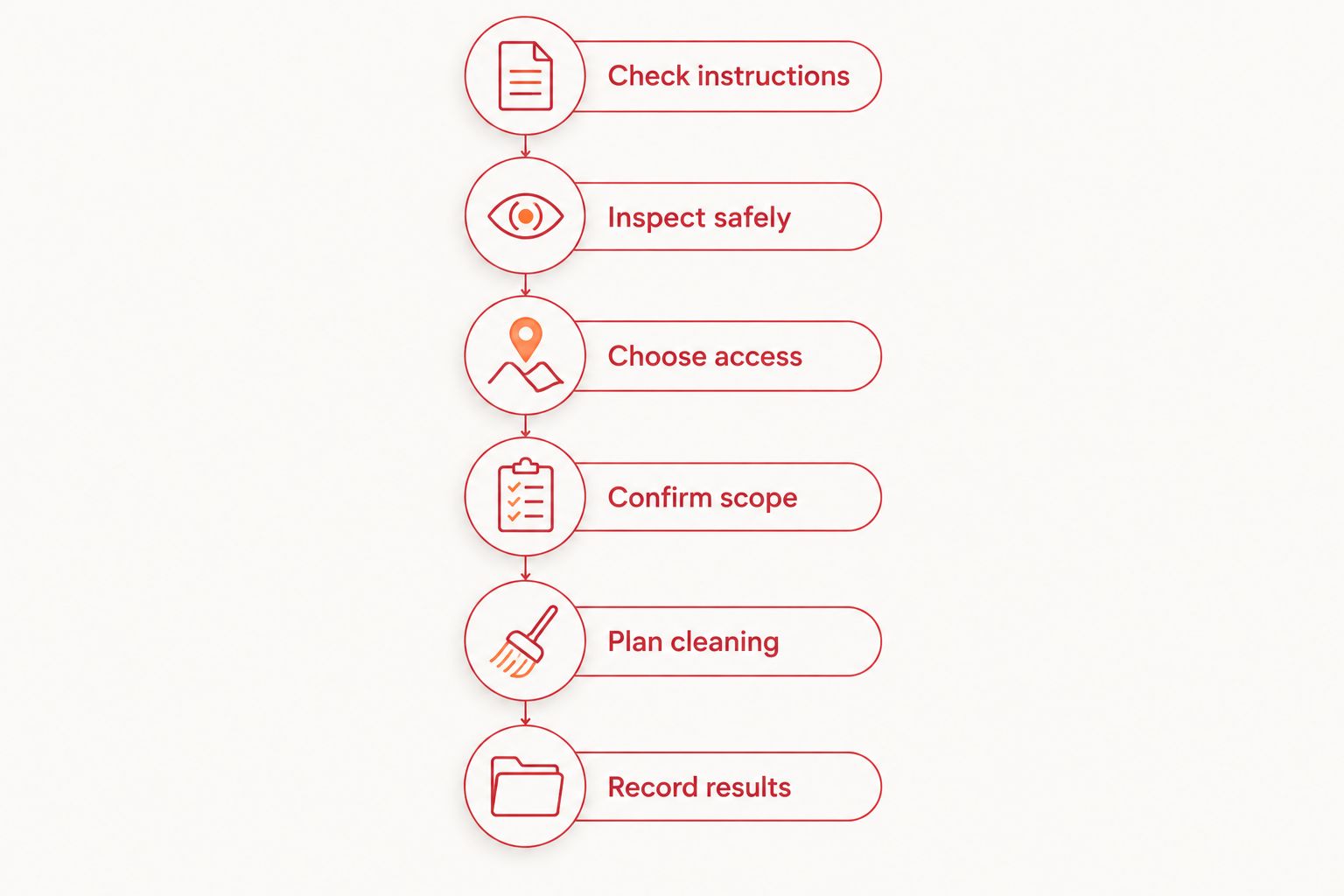
1. Check instructions
Start with the care documentation for your exact panel model. Find the cleaning method, approved materials, water requirements, and any restrictions affecting the surface coating or warranty terms. Instructions for household windows are not a substitute for instructions for photovoltaic modules.
Keep the installer’s contact information with those documents. If you cannot identify the modules or find clear maintenance instructions, ask the installer before selecting cleaning equipment or authorizing a contractor’s proposed method.
Treat shutdown procedures separately from cleaning instructions. Turning off a system does not make illuminated solar modules electrically inactive. Do not open electrical enclosures, disconnect connectors, or handle wiring as part of a cleaning project.
- Find the panel model and its maintenance instructions.
- Save the installer’s contact details.
- Note restrictions on brushes, chemicals, water, and pressure.
- Ask the installer to clarify any electrical safety requirements.
2. Inspect safely
Use a ground-level view, binoculars, or an existing monitoring camera to assess the panels without climbing. Look for visible deposits, uneven soiling, bird droppings, and debris that blocks your view of the glass. Do not step onto a roof merely to decide whether cleaning is necessary.
Separate cleaning concerns from equipment concerns. Cracked glass, exposed wiring, loose components, or signs of heat damage belong with a qualified solar professional, not a routine cleaning appointment. Stop planning the wash until those conditions have been assessed.
For a useful baseline, take 3 photos where safe sightlines allow: an overall view, the affected area, and surrounding access conditions. These are planning records, not a reason to approach electrical equipment or reach beyond secure footing.
- Photograph the array from stable ground.
- Identify visible deposits rather than assuming all discoloration is dirt.
- Note trees, roof edges, and nearby electrical service lines.
- Refer suspected damage to the solar installer.
3. Choose access
Consider homeowner cleaning only when the panels are reachable from stable ground and the manufacturer permits the proposed method. Ground-mounted panels are not automatically safe: nearby wiring, damaged modules, slippery surfaces, and awkward reach still matter.
Roof-mounted panels change the decision. Ladder setup, roof condition, fall exposure, and safe equipment handling require a separate access plan. Hiring a cleaner does not remove those concerns; ask how the contractor will address them before agreeing to the work.
Texas Window Washing, LLC is best for San Antonio homeowners seeking professional solar panel cleaning rather than doing roof work themselves. The company serves San Antonio and surrounding areas and lists solar panel cleaning among its residential exterior services. Its scope is cleaning; suspected electrical faults need a solar professional.
- Keep homeowner work limited to permitted, safely reachable surfaces.
- Reject any plan that involves walking on solar panels.
- Ask contractors to explain access before discussing cleaning tools.
- Use a solar installer for electrical troubleshooting or repairs.
4. Confirm scope
Describe the problem before requesting service. A cleaner needs to know whether you see loose dust, concentrated bird droppings, apparent mineral deposits, or debris around the array. Share photographs rather than diagnosing the material from appearance alone.
Ask what the proposed service includes and excludes. Panel-face cleaning is different from roof cleaning, debris removal beneath modules, pest work, and electrical inspection. Combining those tasks without a clear scope creates avoidable confusion about responsibility.
Texas Window Washing, LLC states that it is fully insured and offers solar panel cleaning. Ask for current insurance documentation and a job-specific method before booking. The company also offers pressure washing for other exterior surfaces; that does not establish that pressure washing is appropriate for your panels.
- Provide the panel model and available care instructions.
- Describe deposits and access conditions accurately.
- Confirm the proposed tools, water, and cleaning materials.
- Identify exclusions such as repairs or work beneath modules.
- Request current insurance documentation.
5. Plan cleaning
For permitted ground-level homeowner care, assemble only the materials allowed by the panel manufacturer. Do not substitute a household glass cleaner, abrasive pad, metal scraper, or exterior-cleaning chemical because it worked on another surface. A panel’s protective glass is part of an electrical assembly, not an ordinary window.
Choose conditions consistent with the equipment instructions. Avoid applying cold water to hot panels, and stop if wind, lightning, slippery footing, or poor visibility makes the work unsafe. Keep water away from electrical connections and never direct a jet toward wiring or equipment openings.
For professional service, agree on the access route and protect the surrounding work area. Move pets and household items away from the agreed area without interfering with the contractor’s safety setup. Do not request extra roof or electrical tasks during the cleaning visit.
- Use only manufacturer-permitted materials and methods.
- Avoid abrasive tools and unapproved chemicals.
- Keep people and pets clear of the work area.
- Stop when weather, footing, or equipment condition becomes unsafe.
6. Record results
After cleaning, compare the visible condition with your original photographs from the same safe position. Look for remaining deposits or newly apparent damage without assuming either requires another wash. Persistent marks need assessment before a more aggressive treatment is attempted.
Save the service scope and completion notes in your 2026 maintenance file. Record what was cleaned, what remained, and any concerns referred to the installer. That record is more useful than relying on memory at the next appointment.
If you monitor production, compare the same reporting intervals and account for weather, shading, and system alerts. Review 7 days of readings as an initial observation period, not as proof of a cleaning-related gain. A sunny week after a cloudy week does not isolate the effect of cleaning.
- Save before-and-after photographs.
- Record the cleaning date and completed scope.
- Note unresolved marks or equipment concerns.
- Review production alongside weather and system alerts.
The decision sequence below keeps equipment guidance and access ahead of cleaning. Follow the same order whether you do permitted ground-level care or hire a contractor.
Compare homeowner solar panel care options
The right option depends on panel condition and access, not simply on who owns cleaning tools. For 2026, separate observation, cleaning, and repair into distinct decisions.
| Option | Best for | Main advantage | Key limitation |
|---|---|---|---|
| Ground-level inspection and monitoring | Homeowners checking whether action is needed | Creates a condition record without roof access | Does not remove deposits or diagnose electrical faults |
| Manufacturer-permitted homeowner cleaning | Intact panels safely reachable from stable ground | Keeps a limited task under your control | Requires suitable access, approved materials, and careful handling |
| Texas Window Washing, LLC solar panel cleaning | San Antonio homeowners seeking professional cleaning | Provides a local cleaning service without homeowner roof work | Access and cleaning scope need confirmation; electrical repair is a separate task |
| Qualified solar installer assessment | Cracked modules, wiring concerns, alerts, or unexplained production changes | Addresses equipment condition rather than assuming dirt is responsible | An assessment is not necessarily a cleaning service |
Choose cleaning for deposits and technical assessment for suspected faults. Neither option replaces the other, and a clean-looking array is not evidence that every component works correctly.
Discuss your solar panel cleaning
Share your San Antonio property’s panel condition and access needs before scheduling service.
Common mistakes homeowners make
Treating solar panels like household windows
Window-cleaning products and stain-removal methods do not automatically suit photovoltaic modules. Use the panel manufacturer’s guidance, even when a cleaner is familiar with residential glass. Get persistent deposits assessed instead of escalating to stronger chemicals or scraping.
Assuming rain settles the maintenance question
Rain does not tell you whether every deposit has cleared. Inspect from the ground afterward and use visible condition to decide whether further action is needed. Equally, do not book a wash merely because rain has been absent; the array still needs a condition-based assessment.
Buying a fixed schedule without checking conditions
A calendar alone does not establish cleaning need. For your 2026 plan, review manufacturer guidance, observed deposits, and access before choosing an interval. Ask what condition would justify an earlier visit and what evidence would support postponing one.
Confusing solar panels with solar screens
Solar panels generate electricity; solar screens shade windows. Their materials and maintenance requirements differ. When requesting service, specify photovoltaic panels so the scope does not get confused with window-screen washing, removal, or installation.
Using electricity production as a dirt detector
Production changes with sunlight, weather, shading, and equipment condition. Check monitoring alerts and compare relevant records before assuming dirt is responsible. A cleaning appointment should not delay investigation of a suspected electrical fault.
FAQ
What’s the safest way for homeowners to clean solar panels?
Limit homeowner cleaning to intact panels safely reachable from stable ground, using the manufacturer’s permitted method. Roof access, damaged equipment, and electrical concerns require professional assessment rather than improvised cleaning.
How often should I clean my home’s solar panels in 2026?
Set your 2026 cleaning plan from manufacturer guidance and observed panel condition, not a universal interval. Inspect safely after noticeable buildup and record what you find before deciding to clean.
Can I pressure wash my solar panels?
Do not pressure wash solar panels unless the exact panel manufacturer explicitly permits that method. Approval for pressure washing a driveway or building exterior does not apply to a photovoltaic module.
Will cleaning definitely increase my solar electricity production?
Cleaning does not guarantee a particular production increase. Removing deposits addresses surface obstruction, while weather, shading, and equipment condition also affect electricity generation.
Is rain enough to clean rooftop solar panels?
Rain is not a substitute for checking panel condition. Inspect from stable ground for deposits that remain, then follow the manufacturer’s maintenance guidance.
Who should I call for solar panel cleaning in San Antonio?
Texas Window Washing, LLC offers solar panel cleaning in San Antonio and surrounding areas. Confirm access, the proposed method, and the job scope before booking; refer suspected equipment faults to a qualified solar professional.
Can I clean solar panels after switching the system off?
Switching off a system does not make illuminated solar modules electrically inactive. Follow the equipment’s safety instructions and do not touch wiring, connectors, or damaged modules during cleaning.
One last thing
Keep the dirty-panel photographs, not just the clean ones. They give your next inspection a reference point and help distinguish recurring deposits from a new concern. Your 2026 maintenance record should explain why cleaning happened, not merely record that it did.
Related guides
- Window washing for luxury homeowners
- Solar screens for Texas homes
- Window cleaning for real estate agents in San Antonio